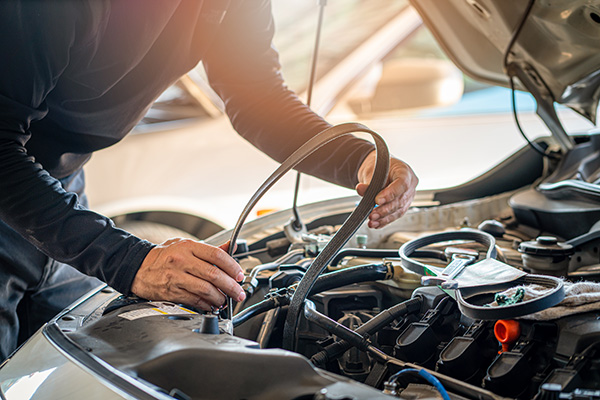
Audi vehicles use advanced engine management, turbocharging, all-wheel-drive systems, electronic controls, and tightly integrated cooling and lubrication systems. When one of these systems develops a problem, the vehicle may continue driving normally at first while a warning light, fluid leak, vibration, or unusual sound provides the earliest indication.
Responding quickly can prevent a smaller fault from affecting expensive components. These five warning signs deserve professional testing, especially when they appear repeatedly, worsen under load, or occur together with reduced performance.
1. A Flashing Check Engine Light
A steady check engine light indicates that the engine control system has detected a fault. A flashing light is more urgent because it usually points to an active misfire severe enough to send unburned fuel into the exhaust. That fuel can overheat and damage the catalytic converter.
Common causes include worn spark plugs, weak ignition coils, injector faults, air leaks, fuel pressure problems, or internal engine concerns. Some Audi engines may run unevenly only during cold starts or heavy acceleration, making the issue appear intermittent.
Reduce engine load if the light begins flashing. Avoid hard acceleration and arrange service promptly. Fault codes identify the affected system or operating condition, but technicians still need to test ignition, fuel delivery, airflow, compression, and wiring before replacing components.
2. A Low Oil Pressure Warning
A red oil pressure warning requires immediate action. Oil pressure keeps engine bearings, camshafts, timing components, turbochargers, and other moving parts separated by a protective film. When pressure falls, metal surfaces can contact each other and wear rapidly.
A low oil level is one possible cause. Still, the warning can also result from a failing oil pump, a restricted pickup screen, internal engine wear, incorrect oil viscosity, damaged wiring, or a faulty pressure sensor. Some Audi engines are also known to consume oil between services, so checking the level regularly remains important.
Stop the engine as soon as it is safe when a red oil pressure warning appears. Continuing to drive while pressure is truly low can damage the engine or turbocharger within a short distance. Adding oil may restore the level, but pressure must still be verified if the warning remains or returns.
3. Coolant Loss Or A Rising Temperature Gauge
Audi cooling systems may use plastic thermostat housings, electric water pumps, coolant control valves, reservoirs, hose fittings, and multiple temperature sensors. Heat cycles can weaken seals and plastic components, leading to leaks that begin as dried residue or a faint coolant odor.
A low-coolant message, weak cabin heat, rising temperature reading, or visible steam indicates that the system needs attention. Electric water pump failures can reduce circulation even when no external leak is visible. A thermostat or coolant control valve can also prevent proper flow through the engine or radiator.
Never remove the coolant cap while the engine is hot. Pressurized coolant can escape forcefully and cause serious burns. Overheating can damage cylinder heads, head gaskets, pistons, and turbocharger components, so the vehicle should not be driven when the temperature rises above its normal range.
4. Transmission Shuddering Or Delayed Engagement
Audi vehicles may use conventional automatic, dual-clutch, or continuously variable transmissions depending on the model and year. Each design requires the correct fluid, level-checking method, and service procedure.
Shuddering, delayed engagement, harsh gear changes, slipping, or repeated hesitation can come from low fluid, worn clutches, valve body faults, control solenoids, mechatronic problems, software adaptations, or engine performance issues. A transmission warning may also place the vehicle into a restricted operating mode.
Do not raise engine speed while waiting for Drive or Reverse to engage. When the transmission finally applies a clutch, the resulting impact can increase internal wear. Diagnostic testing should review fault information, fluid condition, commanded gear, clutch adaptation values, pressure control, and actual transmission behavior.
5. New Rattling During A Cold Start
A brief rattle during startup can indicate timing chain, tensioner, guide, camshaft adjuster, or oil pressure concerns. Timing components depend on clean oil and rapid pressure buildup. Extended oil change intervals, low oil level, sludge, or an incorrect oil specification can accelerate wear.
Some startup sounds come from exhaust shields, accessory pulleys, vacuum pumps, or other external parts, so the noise's location and duration are important. A timing-related rattle may become longer, louder, or more frequent as wear progresses. Camshaft timing faults, rough idling, or reduced power may appear later.
Testing may include listening during a cold start, reviewing camshaft data, checking oil pressure, inspecting the oil filter for debris, and measuring mechanical timing when required. Early evaluation is important because a chain that jumps out of position can allow piston-to-valve contact.
How Technicians Evaluate Audi Warning Signs
Accurate service begins by confirming the exact symptom and the conditions that produce it. The technician reviews dashboard messages, scans all relevant control modules, checks service records, and compares live data with expected values. Electrical circuits, fluid levels, pressure readings, mechanical condition, and visible leaks may all require testing.
An inspection should also look beyond the immediate warning. An oil leak can damage a belt or mount, a misfire can overheat a catalytic converter, and a cooling fault can affect the turbocharger and engine. Regular maintenance with the correct fluids, filters, and service procedures reduces preventable wear, but new warnings still require direct evaluation.
Get Audi Service In Portland And Redmond, OR, With Portland Motor Works
Portland Motor Works serves Audi drivers in Portland and Redmond, OR. Our team can evaluate warning lights, oil pressure concerns, coolant loss, transmission behavior, startup rattles, and related performance problems.
Contact us to schedule Audi service before an early warning develops into a larger repair.